
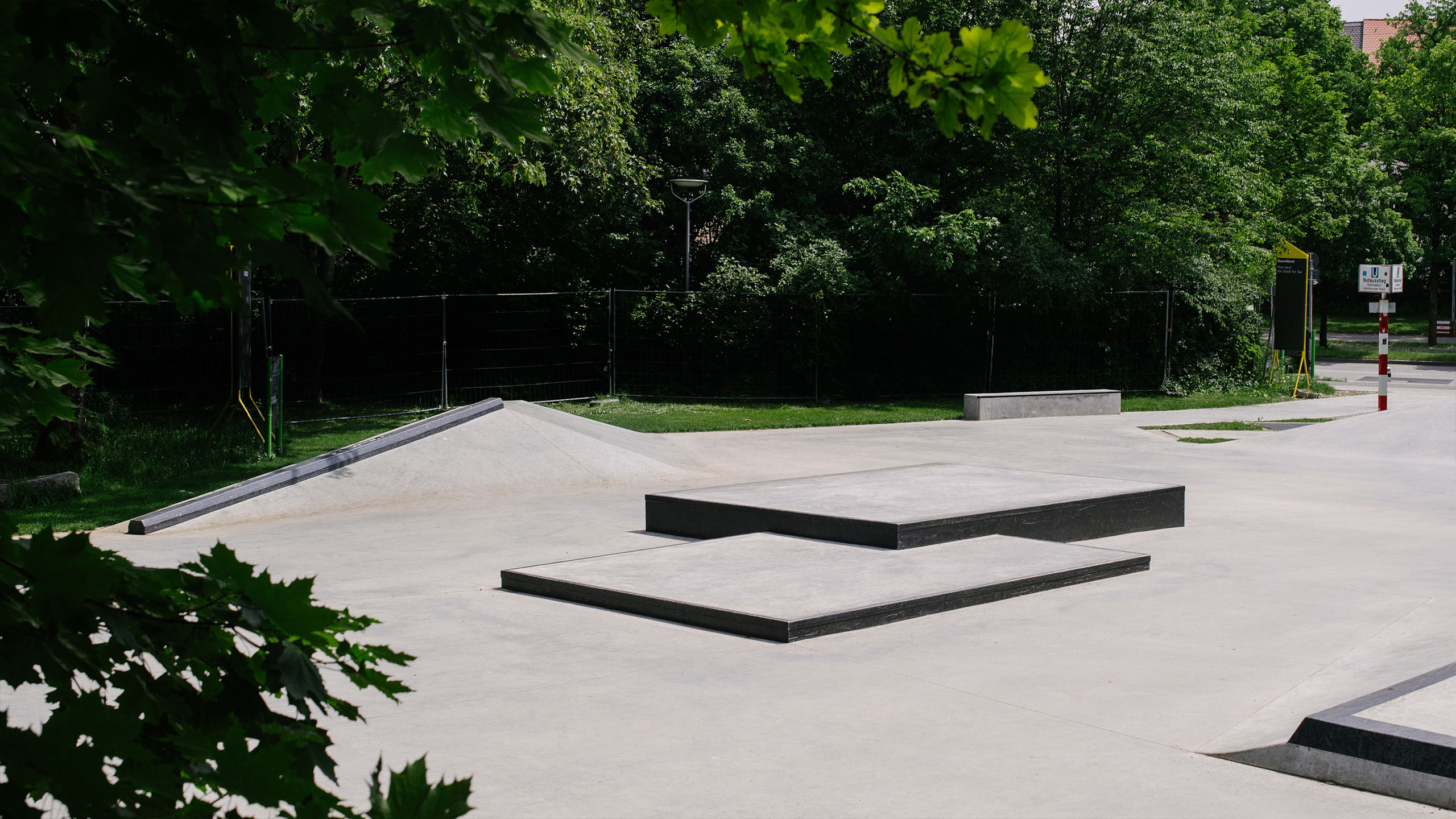
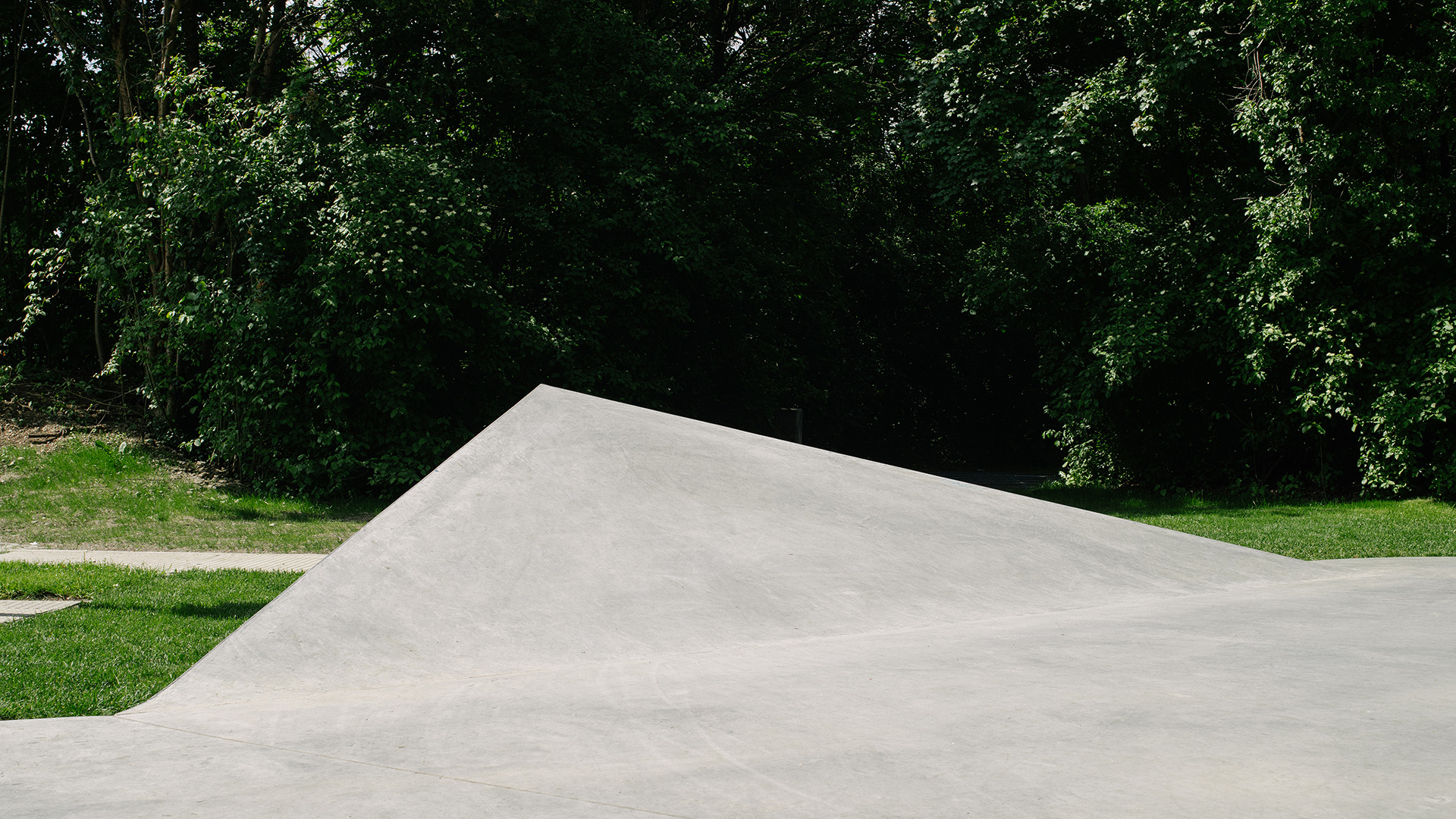
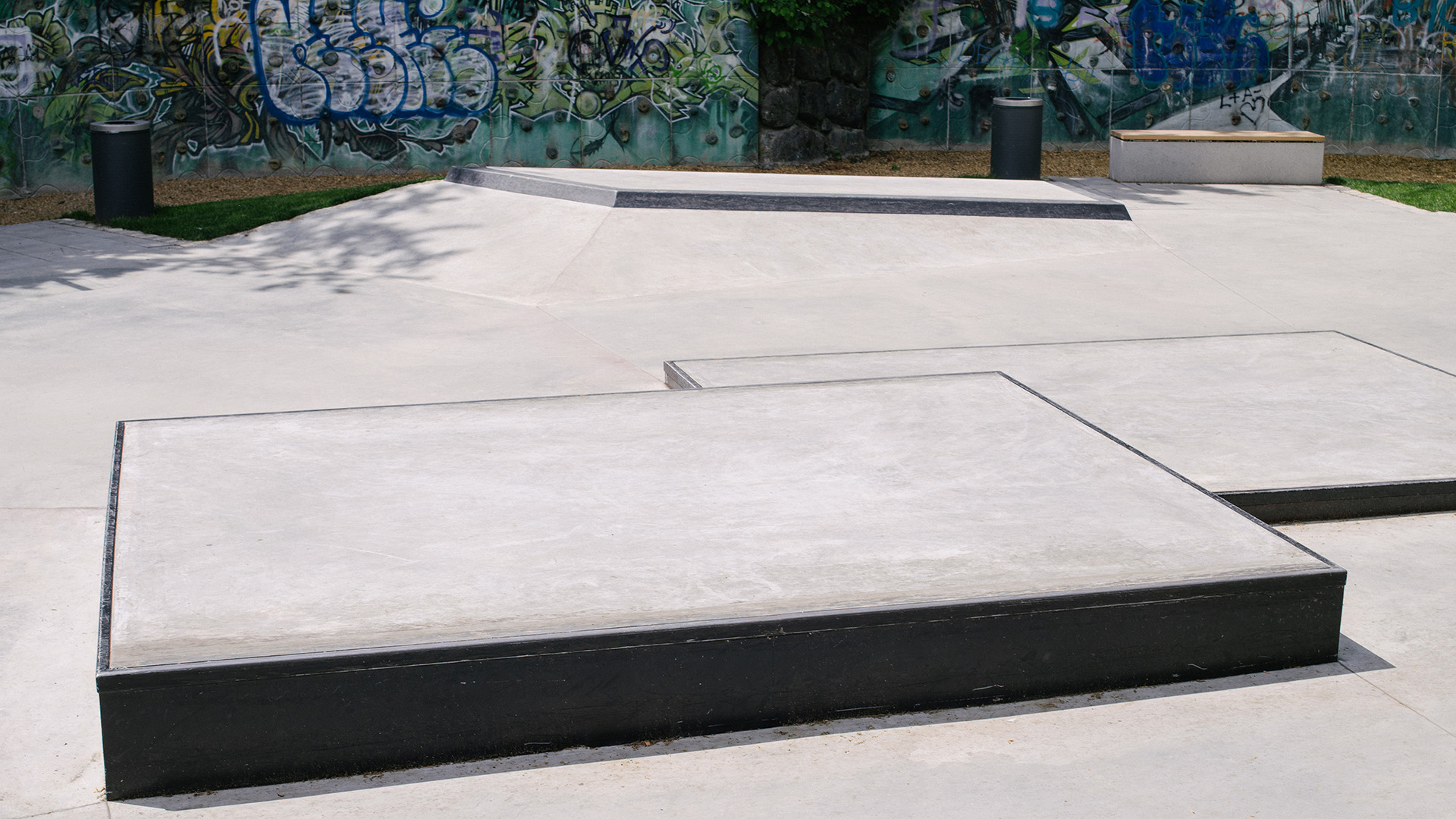
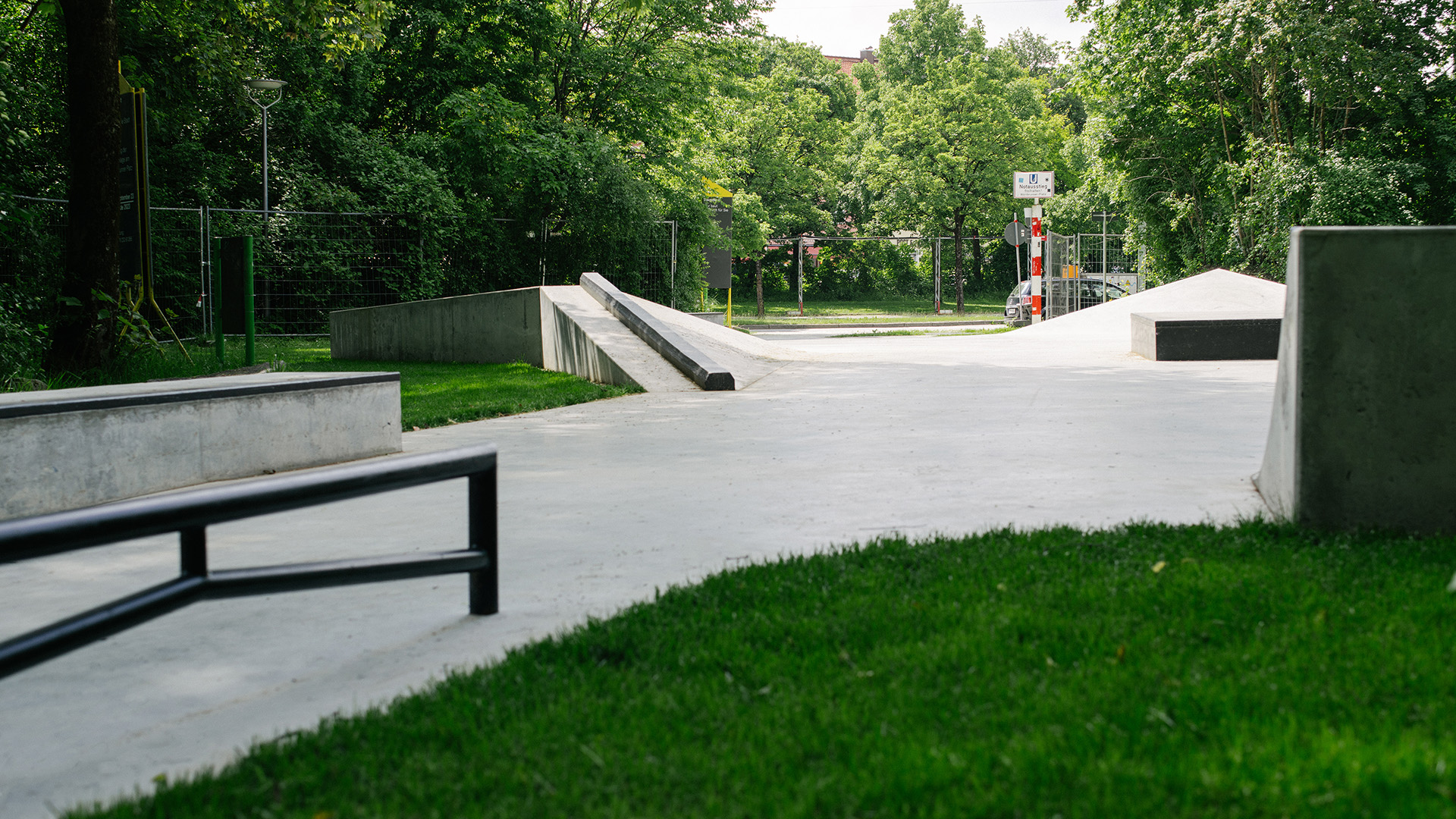
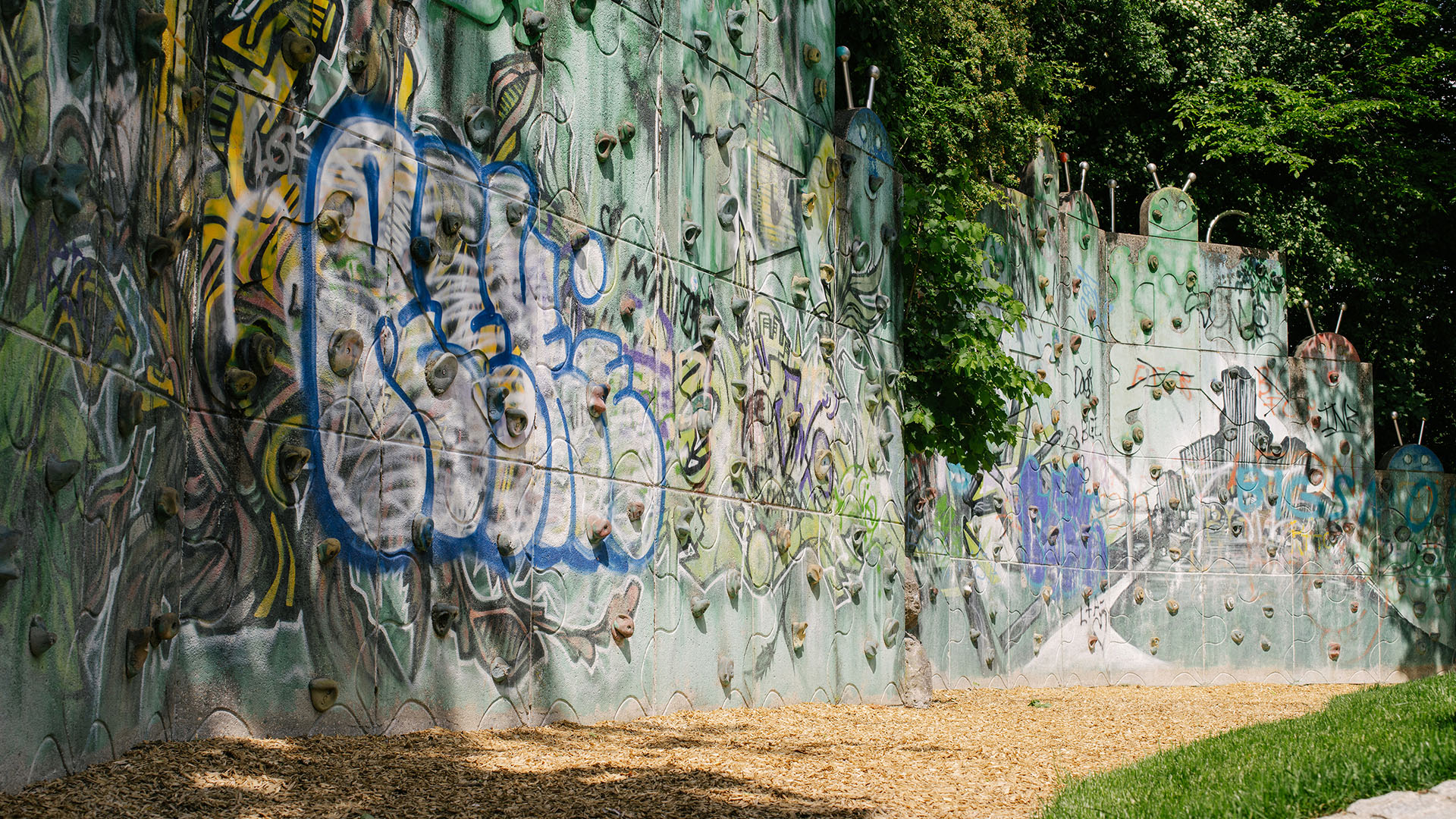
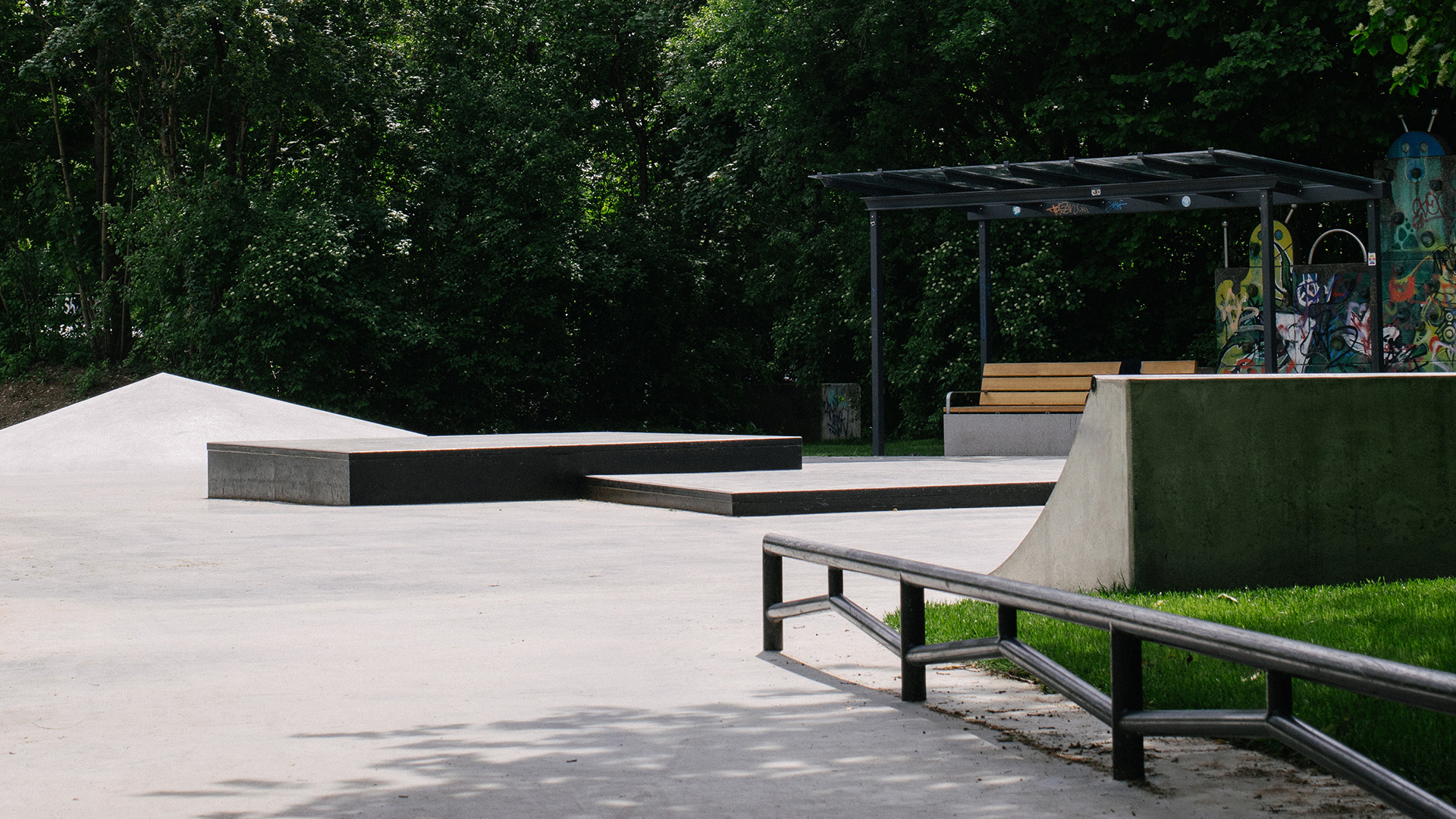
In Mangfallplatz Park, a 300 m² skate area from the era of catalog skate parks was fundamentally redesigned in collaboration with local users and the city. Instead of a classic facility, a “shared spot” was created: a multifunctional space in which paths and skate areas work together synergistically and the boundary between passersby and roller sports users is deliberately blurred. The goal was to maximize functionality in a small space without losing the character of the park.
In terms of design, the site is based on the logic of urban architecture: seating edges, borders, boundaries, and sculptural elements are positioned in such a way that they fit naturally into the green space—and at the same time can be “accidentally” skated on. The micro skate park thus reads more like a discovered street spot than a designated sports area. Flat ramps, flush edges, sufficient widths, and clear sightlines ensure low-conflict operation; subtle material changes and radii guide the lines without disturbing foot traffic.
The surface design prioritizes versatile lines in a small space: linear and circular riding references can be combined, short transfers connect paths and spots, and different height gradations allow progression from beginner to advanced levels. Robust and high-quality details ensure durability and a calm, park-compatible appearance.
Three concept variants were developed during the process, each of which plays on the shared spot approach to varying degrees—from very subtle “architectural legibility” to sporty accents. The renovated Mangfallplatz blends into the park as a green meeting place, offering a wide range of functions in a small area while remaining an open space for everyday life, exercise, and relaxation.