Osthofen, Skatepark
Info
Description
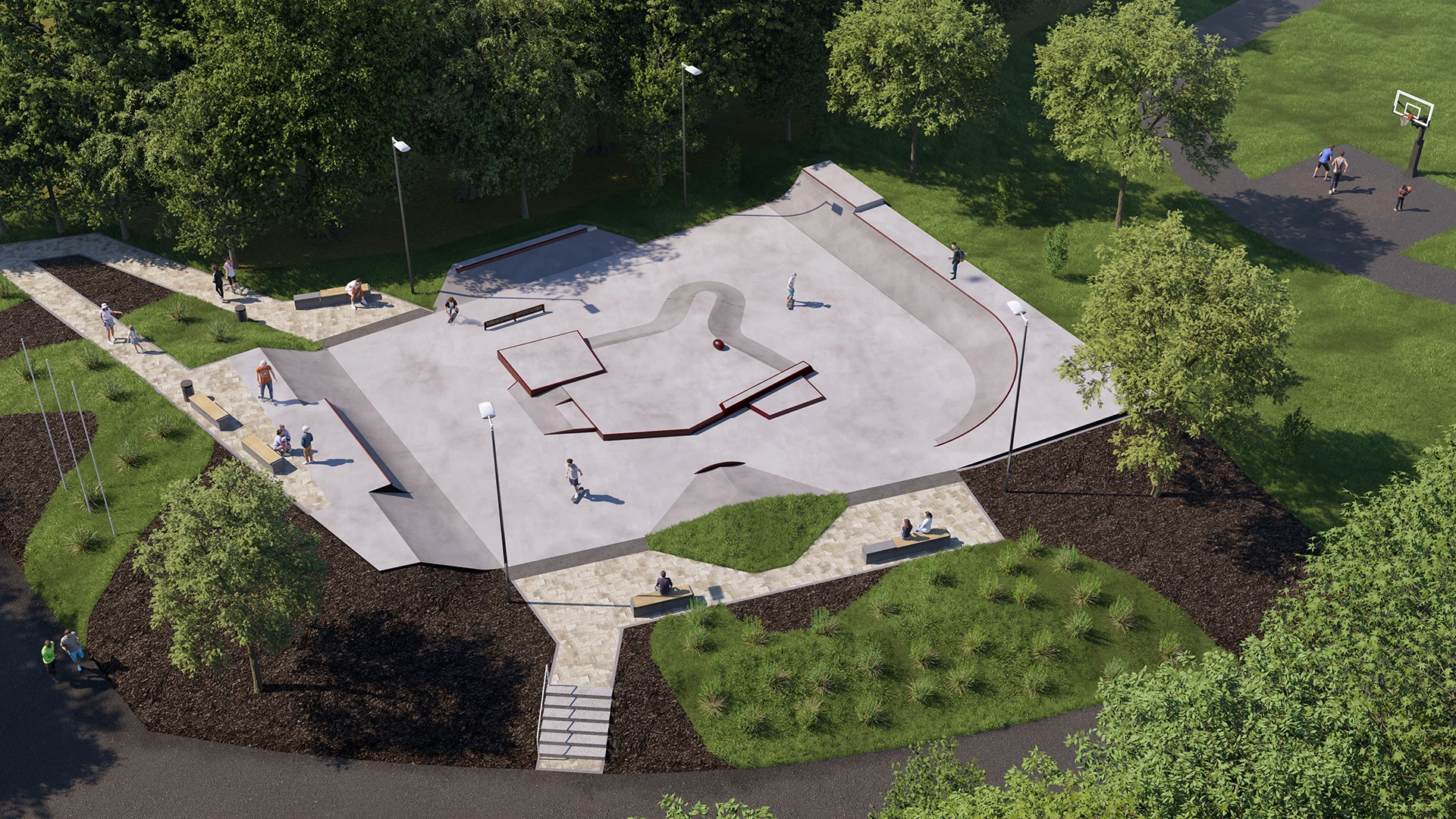
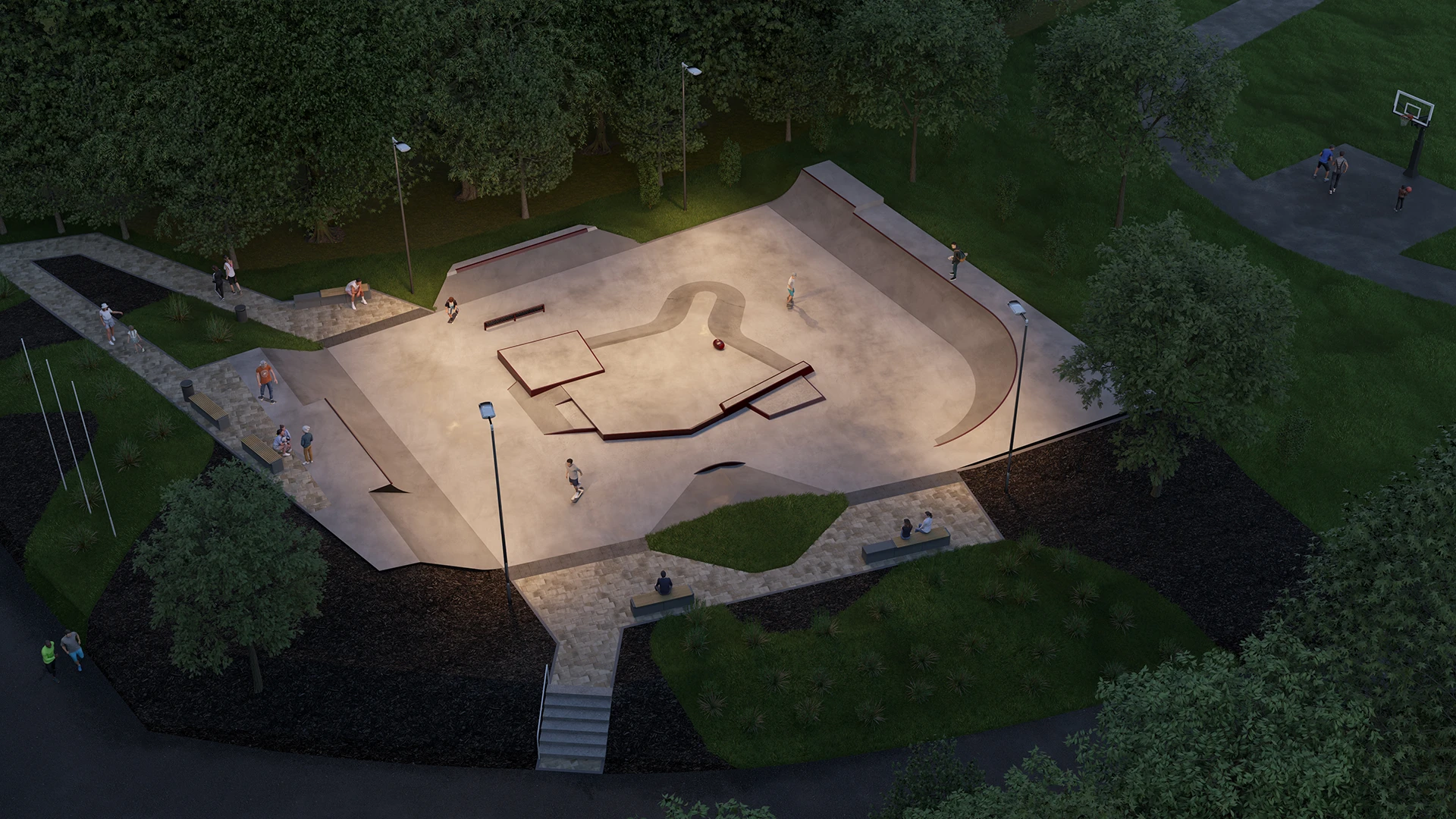
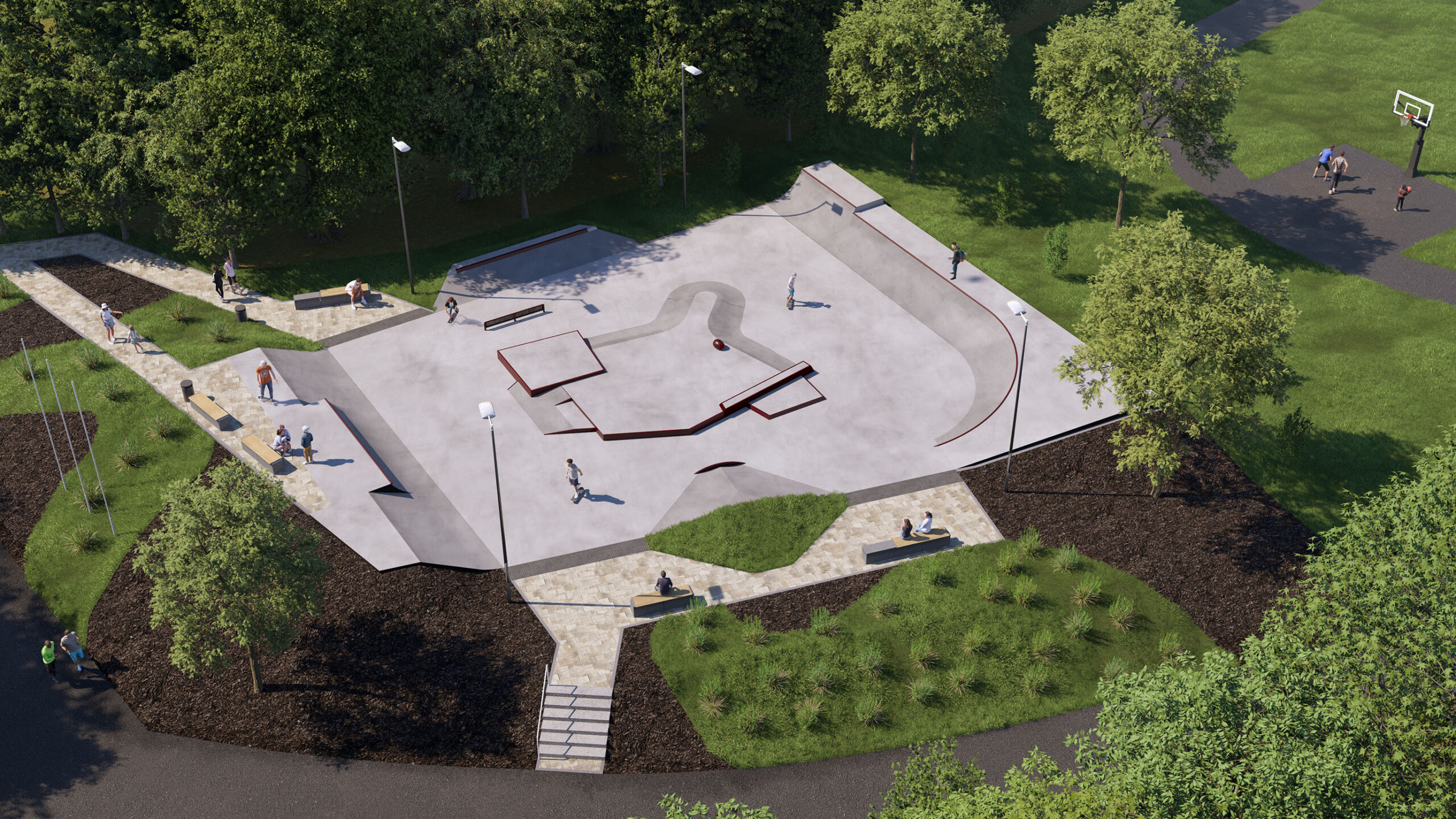
A 500 m² skate park made of in-situ concrete was built in Osthofen. Its design reflects the town’s wine-growing tradition and it functions as a freely accessible meeting place based on the principle of “free, open and outdoors.” The design was refined in several participatory workshops with the local scene and focuses on a street flow layout with a low base height, clear sightlines, and easily visible access points – usable for skateboards, scooters, inline skates, BMX bikes, and designed to be inclusive, including for WCMX.
At its core, a centerpiece structures the flow of riding: London Gap, Pier 7 Manual Pad, and Bump-to-Slappy bundle the main lines and branch them creatively throughout the park. The northern front side forms a transition cluster consisting of a quarter with extension and diamond coping; a curved WCMX ramp independently opens up the highest point and allows for wide, low-conflict entrances and exits. Opposite, a bank side with a recessed quarter connects. A bank hip with rainbow rail, a speed bump connected to the centerpiece, and a bank-to-slappy provide surrounding lines. The flat areas can be accessed directly from the flat bar, manual pad, and flat ledges of varying heights. This creates clear progression levels from beginner to advanced, and the multi-line principle ensures permanently diverse, creative lines. A jumpable grapevine feature subtly references viticulture and anchors the facility in the local area.
The park blends into the landscape thanks to newly planted trees, green border areas, and gently contoured embankments. Open edges and a transparent layout increase social safety and create pleasant viewing areas with recreational value. Seating edges with wooden covers at the western entrance, additional seating areas at the northern end, and discreetly colored paved paths frame the park without overshadowing its green character. The result is a precisely detailed skate park that naturally combines regional identity, functional flow, and natural open space design.