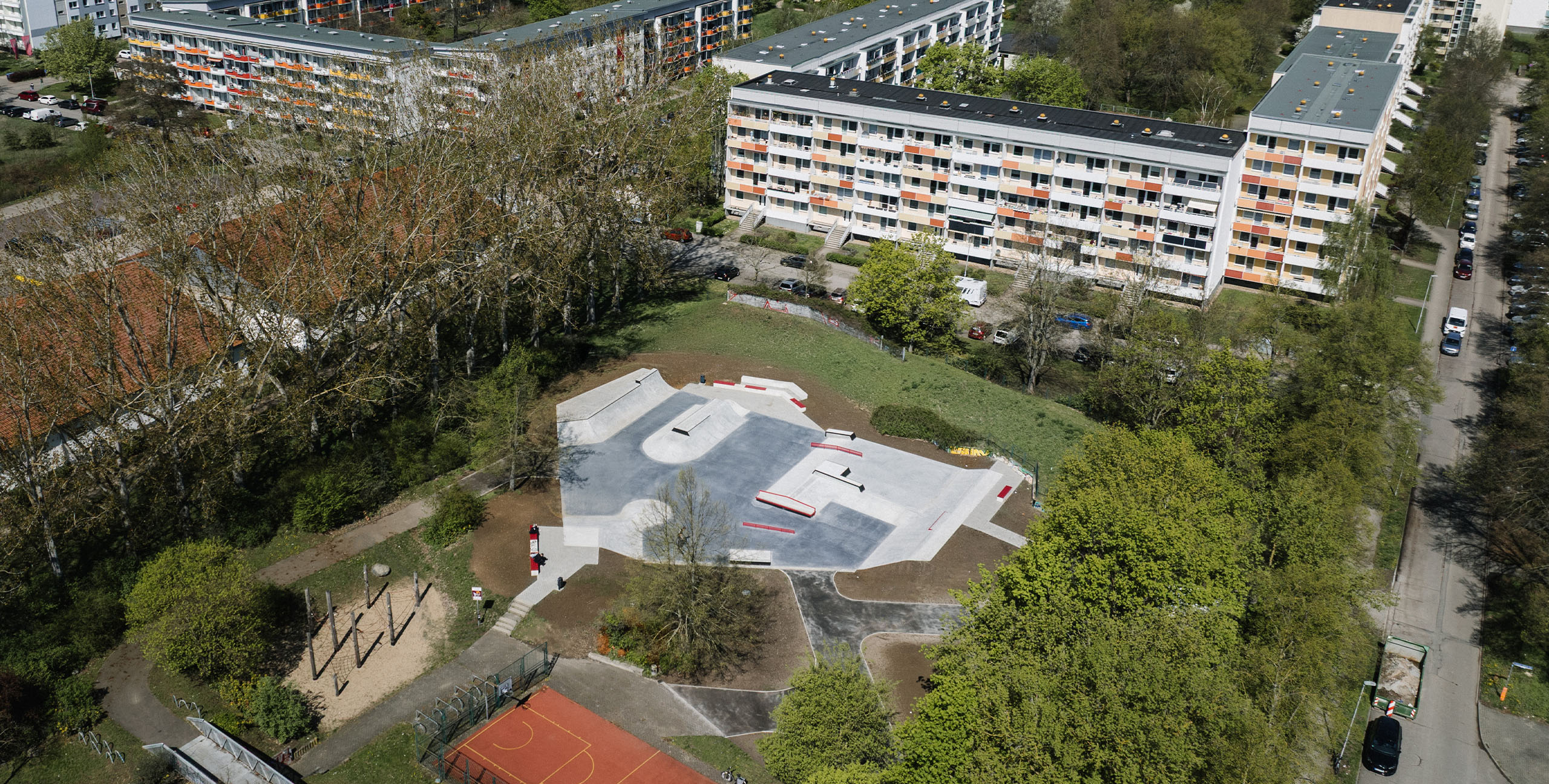
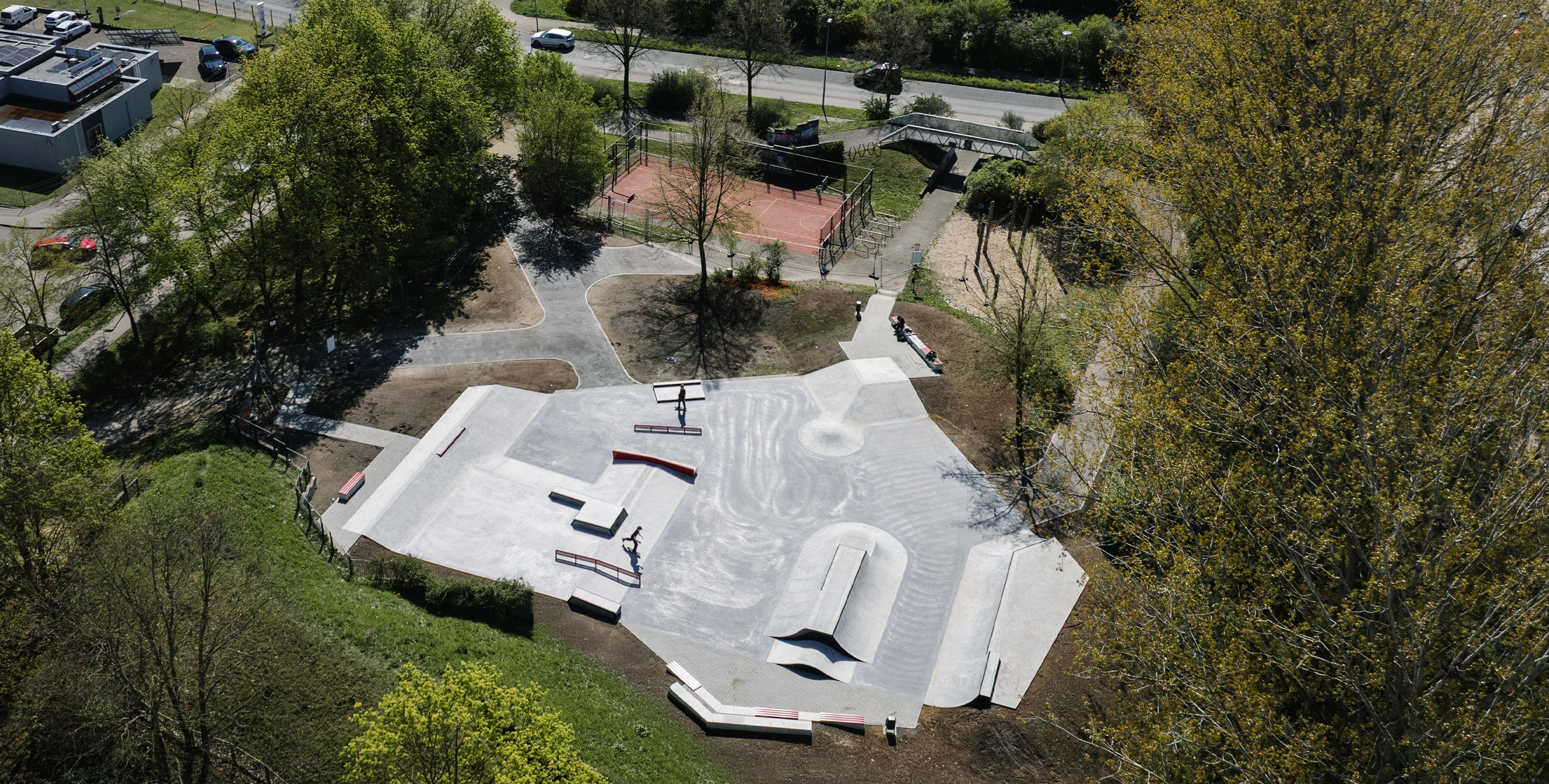
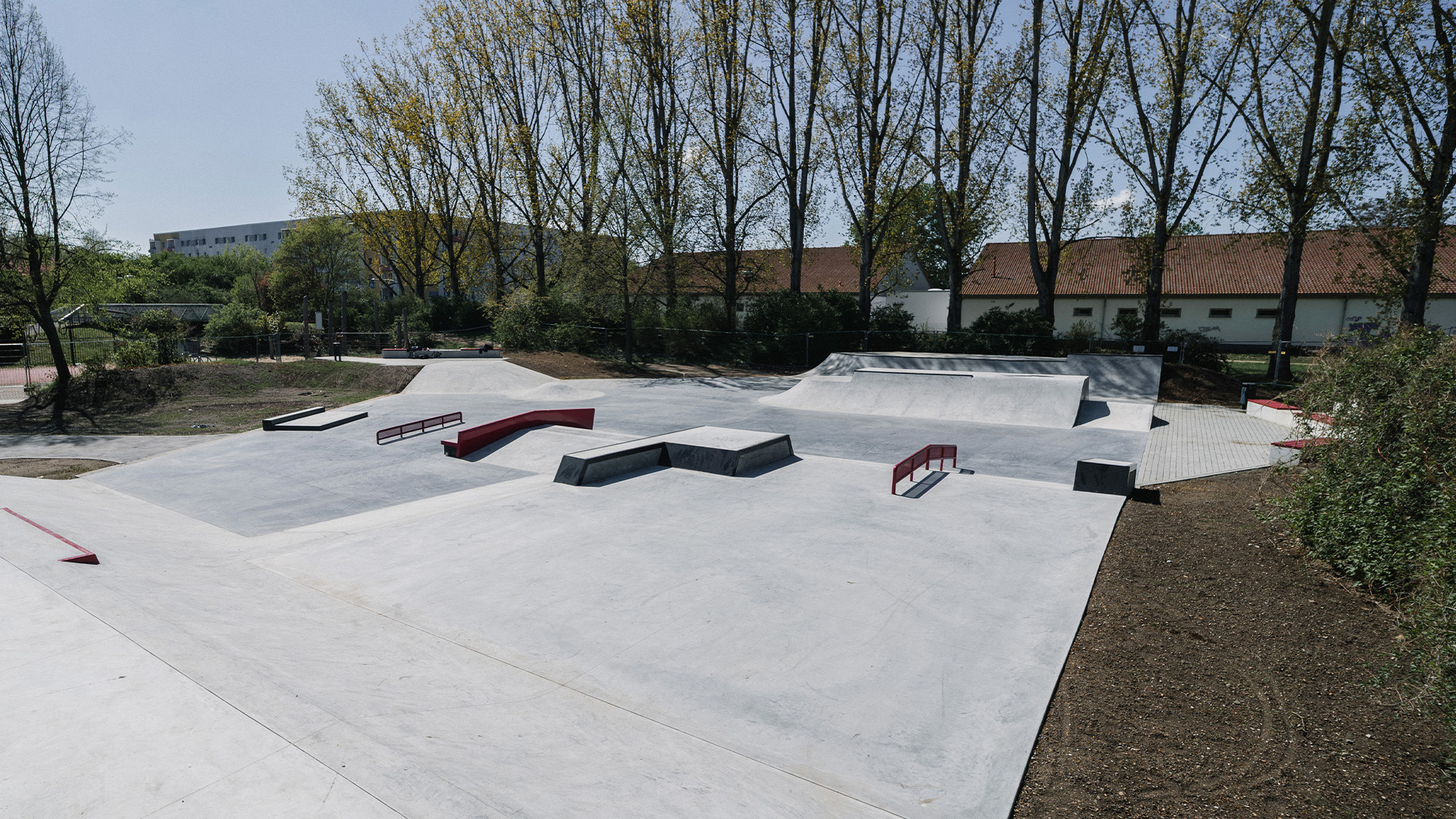
At Olvenstedter Scheid in Magdeburg, a new public space for urban movement cultures is being created, bringing together athletic use, social interaction, and a strong urban presence. Across approximately 800 m², the skatepark is conceived as an open offer within the public realm, defined as much by its precise design as by its low-threshold accessibility. The starting point of the design is the idea of creating a place that does not respond solely to athletic performance, but also serves as an informal movement-oriented meeting point within the neighborhood.
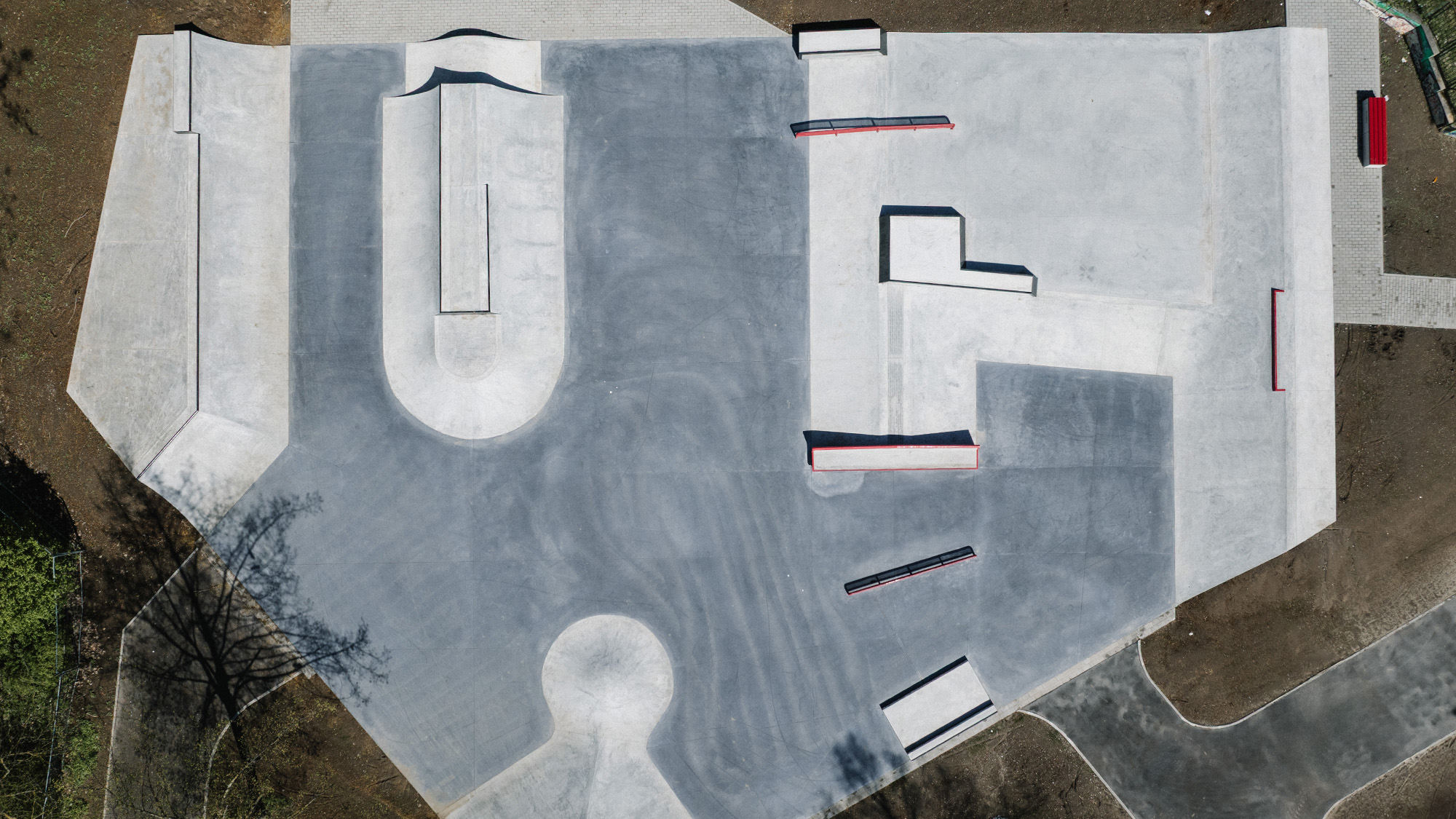
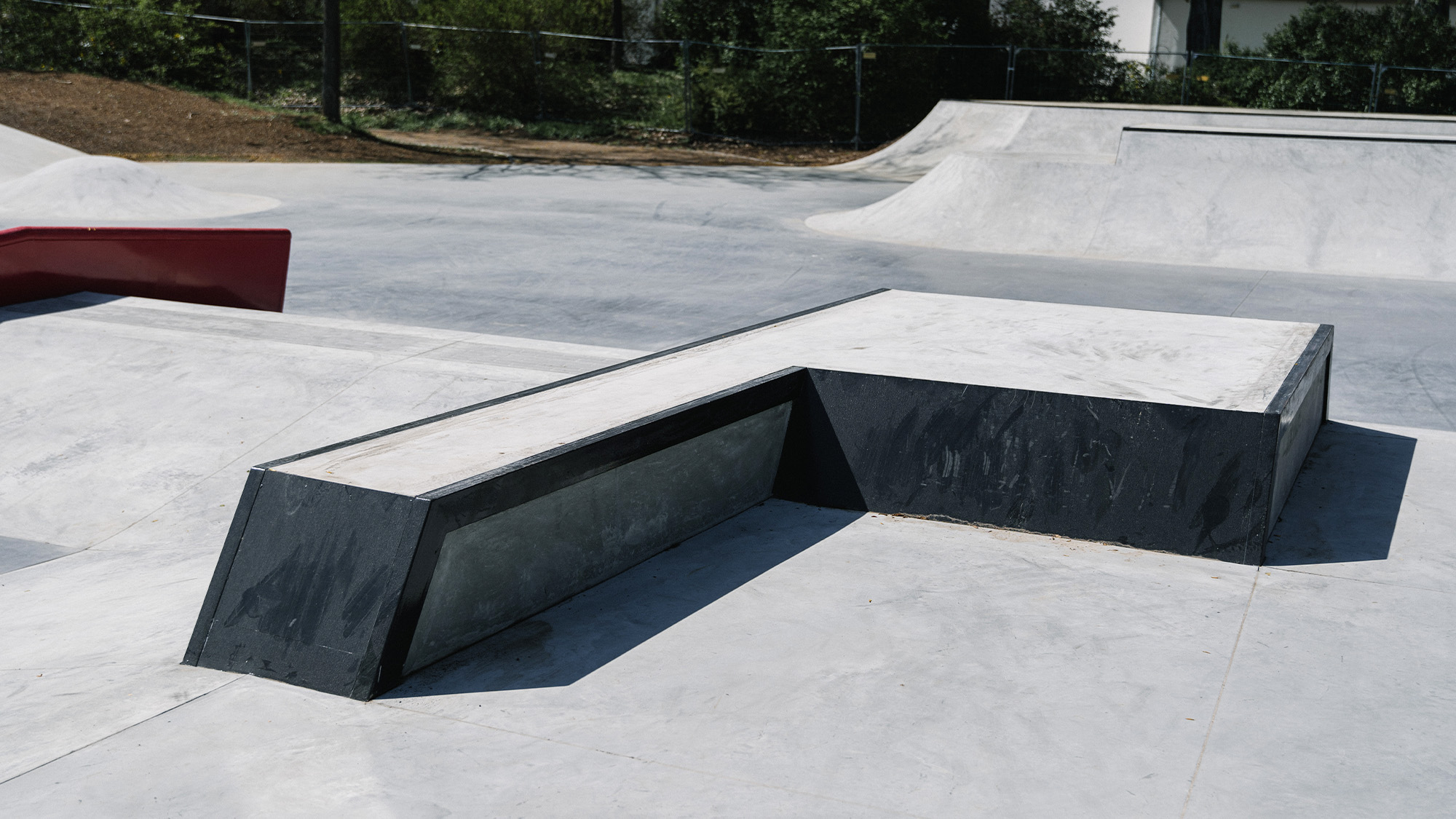
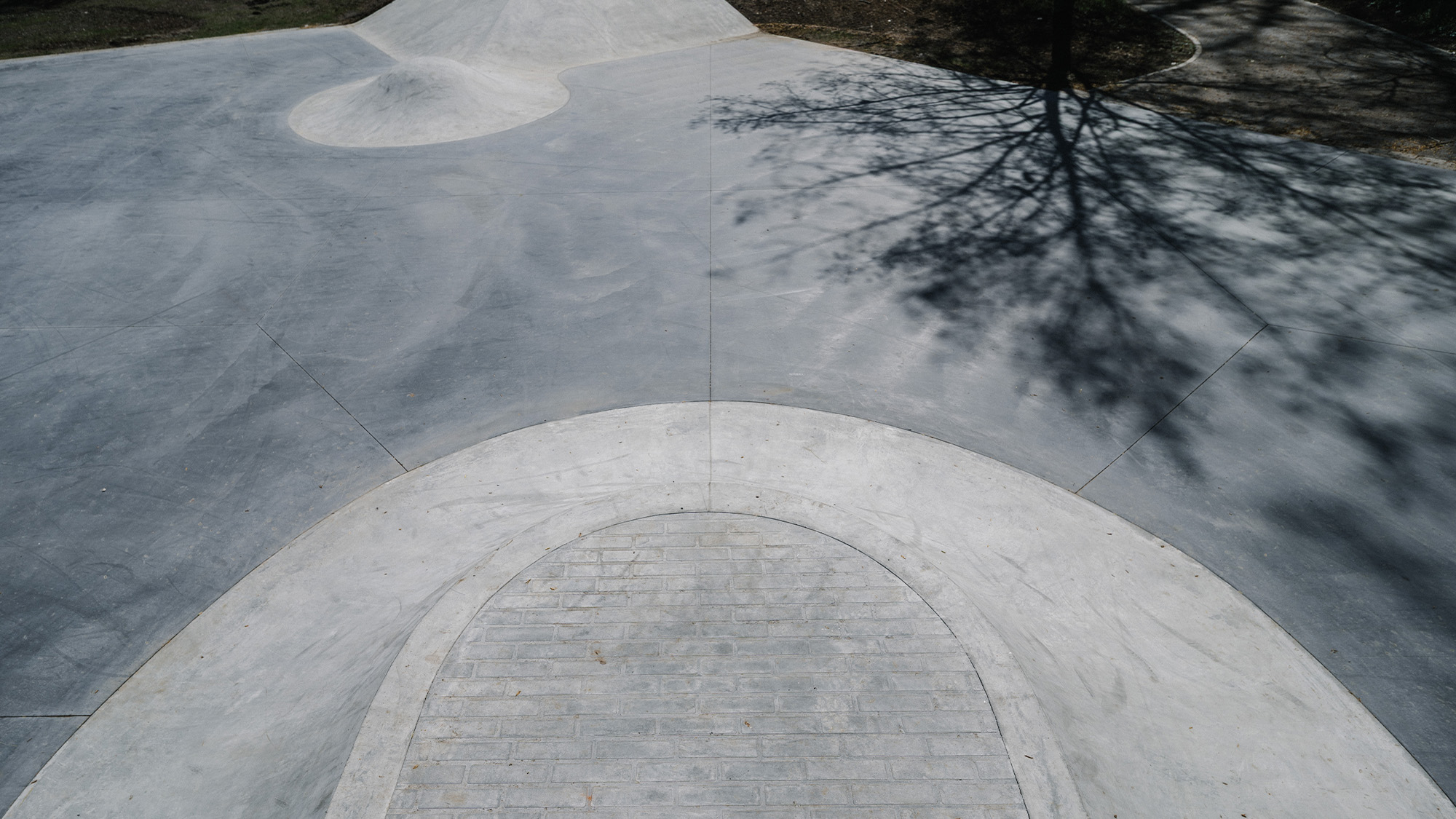
The facility has been developed from the needs of the local users and translates them into a spatial framework that combines openness, clarity, and diversity of use. Differentiated levels with carefully placed, more challenging elements structure the area. The result is a park that works equally well for movement and for staying: clear sightlines, legible access points, and a high-quality material palette create a place that has a strong presence in the urban fabric while remaining informally rideable. The integrated park bench replica provides an identity-defining feature and deliberately anchors the project in the language of urban space.
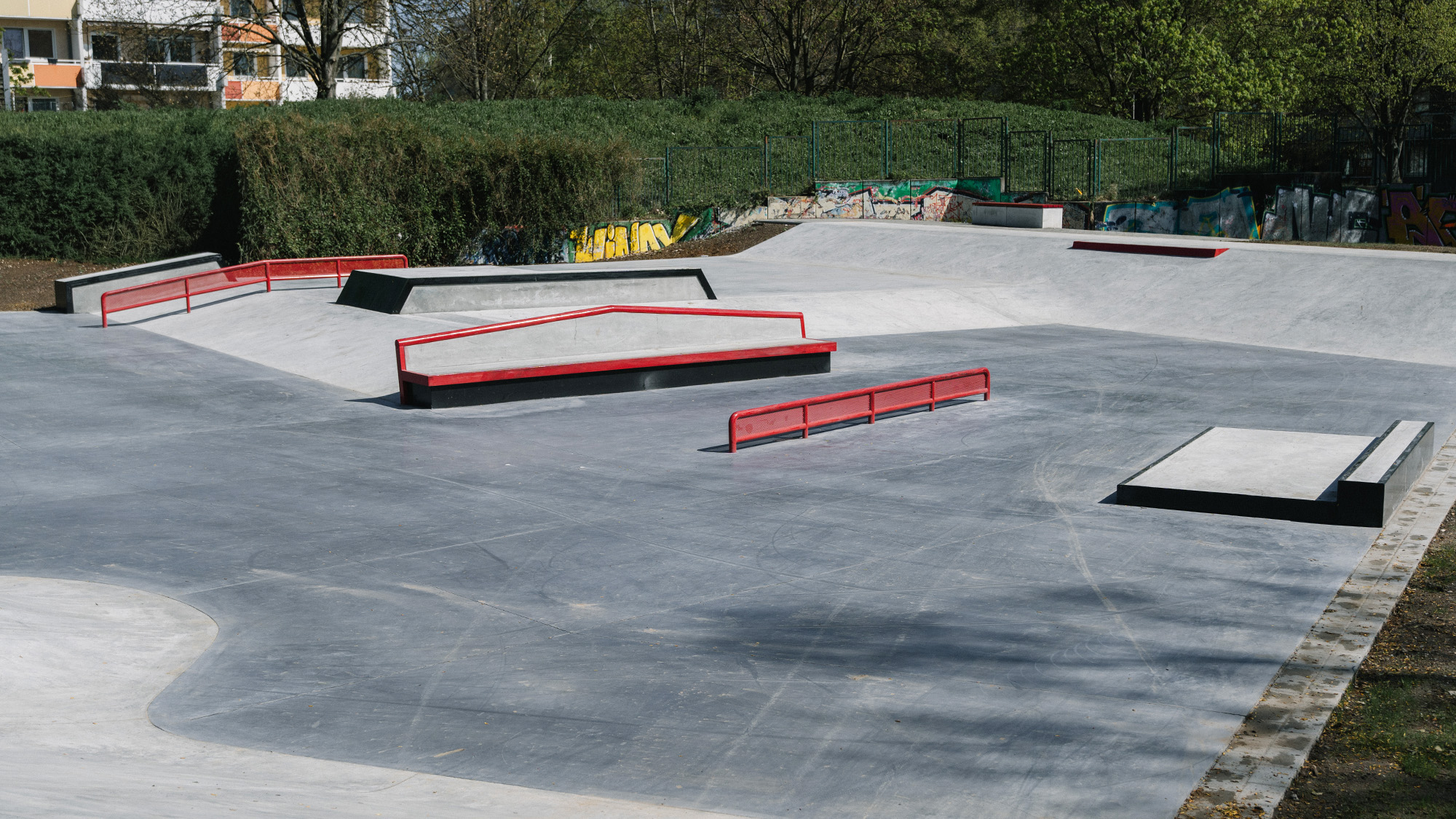
Atmospherically, the design is based on clarity and durability. Dark grey in-situ concrete, selective white markings, and red accents shape the appearance and give the facility its own visual logic. Seating areas with concrete benches and colored overlays frame the space and strengthen its role as a meeting point. Barrier-free access, including a WCMX ramp, makes the park naturally accessible to a wide range of users. The result is a contemporary movement space in Magdeburg that does not read as an isolated sports facility, but as a precisely designed part of the public realm.