Falkenstein, Skatepark
Info
Description
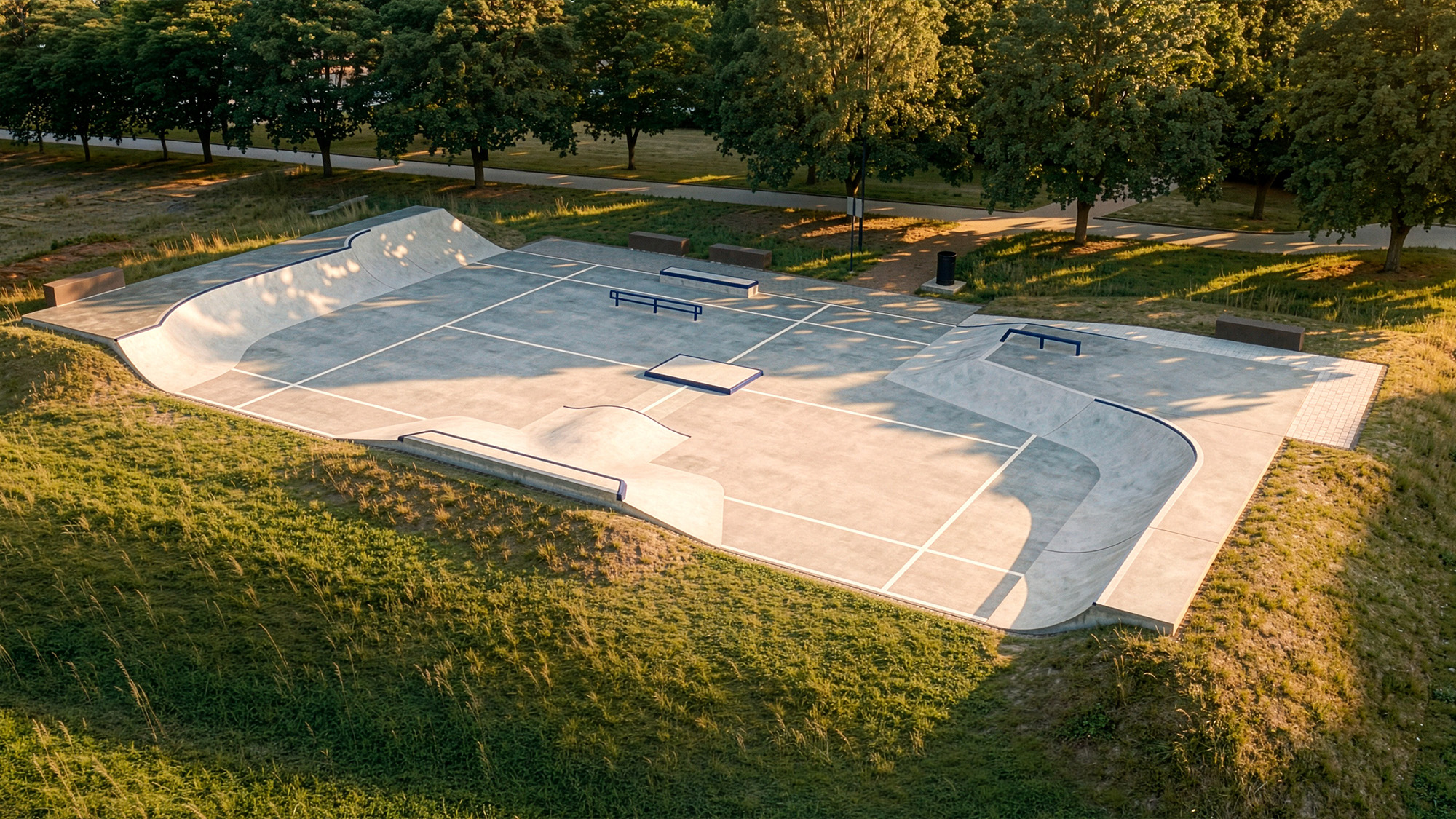
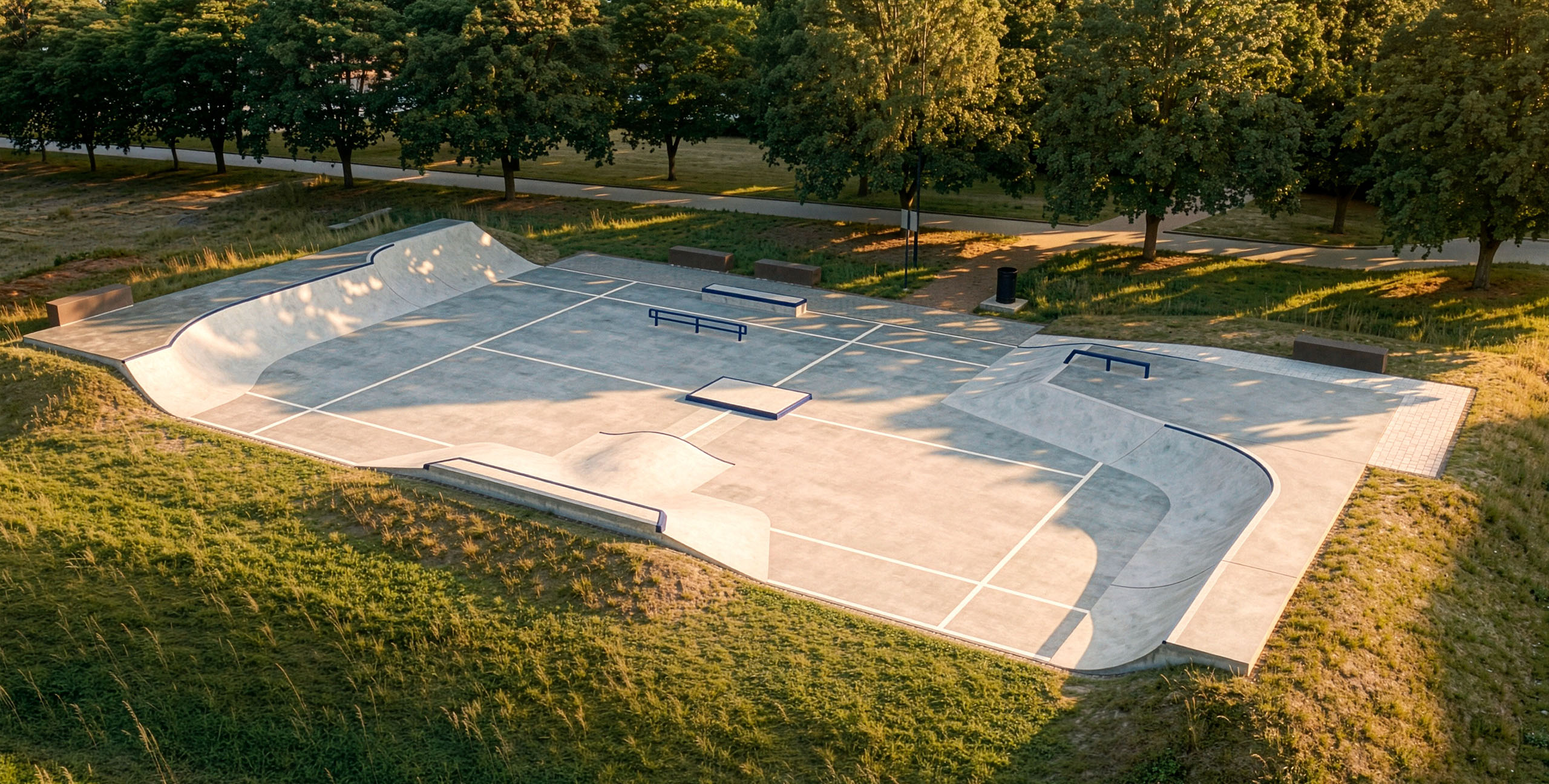
At the Sport and Leisure Center in Falkenstein, a former tennis court is being transformed into a new skatepark with approximately 450 m² of riding surface. In this way, the project reuses an existing sports area without obscuring its spatial origin, developing a new meeting point for informal movement practices out of the existing site. The project was initiated by the local scene and refined through several participation stages, resulting in a compact, versatile space with a distinct identity.
The park draws its particular character from the deliberate continuation of the former tennis court. Lines, markings, and design details reference the visual language of the court and translate it into a new skateable terrain. This keeps the history of the site legible without becoming intrusive. Rather, the project develops its design directly from the existing structure, which is precisely what gives it such a strong sense of individuality. Its clear formal language, reduced material palette, and distinctive court references give the park a precise and recognizable expression.
Its integration into the surrounding setting is also an essential part of the concept. The skatepark is embedded within the green spaces of the sports center and remains clearly visible thanks to its open layout. Adjacent areas, the existing path, and the renaturalized former lower tennis court are all consciously included, tying the facility into the broader landscape setting. Seating boulders and visible resting areas complement the park without overwhelming it. The result is a movement space in Falkenstein that develops a new use out of a former tennis court and derives its particular quality precisely from this transformation.